Weather Pattern Correlations with Digital Table Game Participation Spikes in Inland Regional Networks
Casey Krause · Jun 26, 2026
Weather Pattern Correlations with Digital Table Game Participation Spikes in Inland Regional Networks
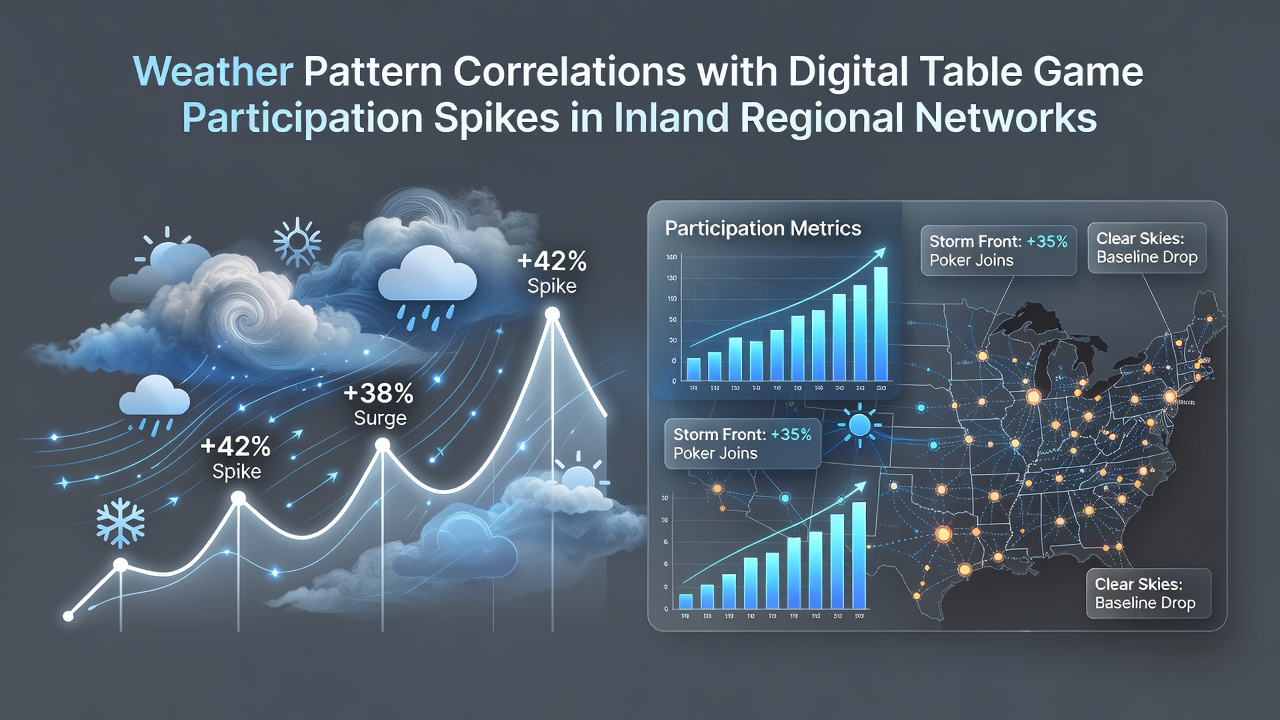
Weather systems moving across inland areas often coincide with measurable increases in digital table game activity on regional networks, and researchers have tracked these patterns through server logs and meteorological records for several years. Data from multiple inland zones shows that certain atmospheric conditions align with higher login rates and extended session times during table game play, particularly in areas where outdoor options become limited.
Regional Network Characteristics and Data Collection
Inland networks span central landmasses where population centers sit far from coastlines, adn these systems connect players through mobile and desktop platforms offering blackjack, roulette, and poker variants. Operators compile participation metrics that include session duration, table type selection, and peak connection times, while cross-referencing those figures against weather station outputs from the same periods. Observers note that networks in the central United States and similar continental zones provide consistent datasets because weather events tend to develop without the moderating influence of large bodies of water.
Key Weather Variables Linked to Participation Changes
Heavy precipitation events, rapid temperature drops, and prolonged high-pressure systems each correlate with distinct participation patterns according to aggregated network statistics. Thunderstorm outbreaks frequently precede spikes that last several hours, whereas extended cold snaps produce steadier but lower-intensity increases spread across multiple days. Researchers at institutions tracking both meteorological and digital activity have mapped these overlaps using timestamped data sets that cover thousands of user accounts across state and provincial boundaries.
June 2026 brought several such alignments in the central plains, where clusters of severe weather days matched elevated table game volumes on inland servers. Network operators recorded the timing of these events through automated reporting tools that flag deviations from baseline averages, and the resulting figures revealed consistent directional movement between storm arrival and connection growth.
Analytical Approaches Used in Recent Studies
Analysts apply time-series comparisons and geographic information overlays to isolate weather effects from other variables such as promotional schedules or device updates. One method involves overlaying radar summaries onto heat maps of user density, while another tracks barometric pressure readings against average session lengths. These techniques allow teams to quantify how quickly participation rises after a weather alert and how long the elevated activity persists once conditions stabilize.
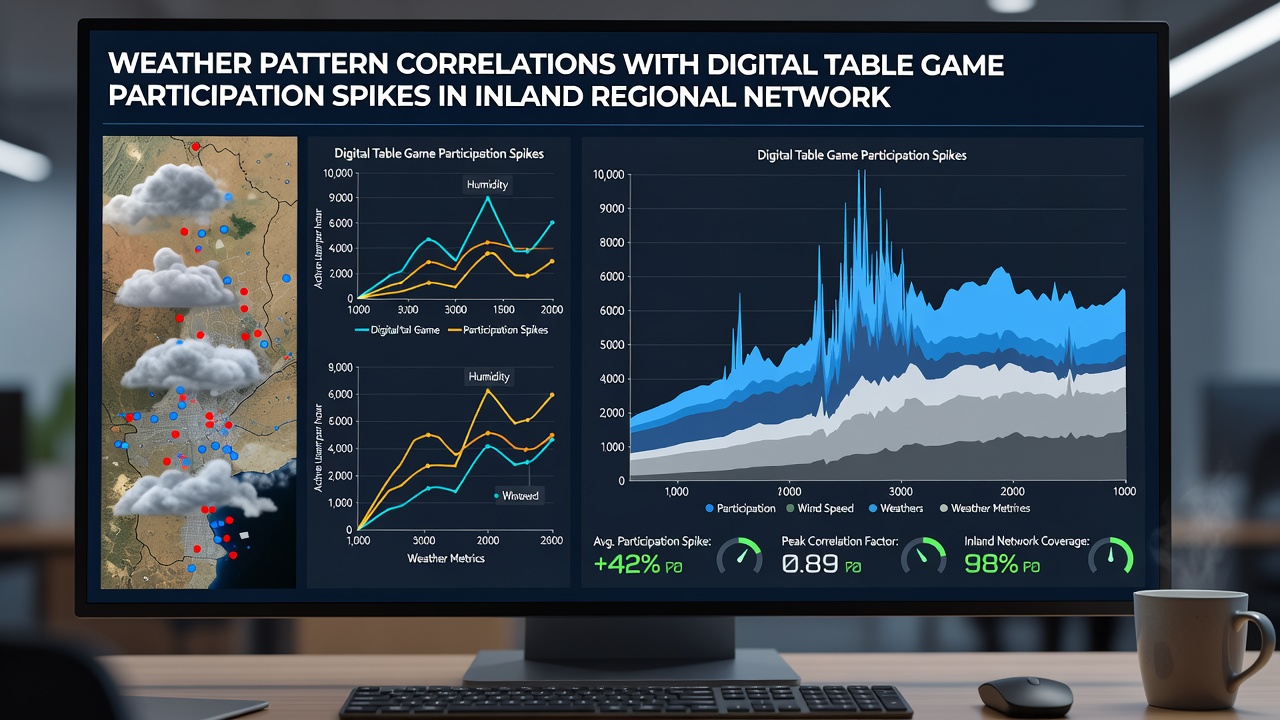
Studies conducted through partnerships between atmospheric research groups and gaming analytics firms have produced reports that isolate precipitation volume and temperature gradient as the two strongest predictors within inland datasets. Findings from these collaborations appear in technical summaries released by organizations such as the National Oceanic and Atmospheric Administration, which supplies the underlying weather grids, and academic centers that maintain anonymized participation archives.
Geographic Variations Across Inland Zones
Networks in the upper Midwest exhibit sharper spikes during winter weather systems compared with southern inland corridors, where summer humidity and thunderstorm clusters drive more pronounced short-term surges. Australian interior regions show parallel responses during heatwave periods, although the absolute numbers differ because of population density and platform availability. Canadian prairie networks display similar cold-weather correlations, with data sets extending through the 2025-2026 season confirming the repeatability of these patterns across hemispheres.
Technical Infrastructure Supporting the Observations
Server farms handling inland traffic maintain sub-second logging of every table game interaction, and these logs feed into centralized repositories that also ingest weather feeds from national monitoring stations. Algorithms flag anomalies when connection counts exceed three standard deviations from rolling averages, and meteorologists then review the corresponding atmospheric conditions. This dual-stream approach has become standard among operators serving landlocked markets because it reduces noise from coastal or urban variables.
Conclusion
Records compiled through 2026 continue to demonstrate that inland weather patterns and digital table game participation share measurable temporal relationships, with precipitation and temperature shifts serving as the primary markers. Continued monitoring across multiple continents supplies expanding datasets that refine the precision of these correlations, while infrastructure improvements allow faster integration of new weather and usage feeds. The resulting body of evidence supports ongoing analysis by both meteorological agencies and network administrators seeking to understand activity rhythms in continental environments.