How Altitude Variations Impact Battery Life During Extended Sessions of Virtual Card Dealing on Mobile Platforms
Kai Albrecht · Jun 23, 2026
How Altitude Variations Impact Battery Life During Extended Sessions of Virtual Card Dealing on Mobile Platforms
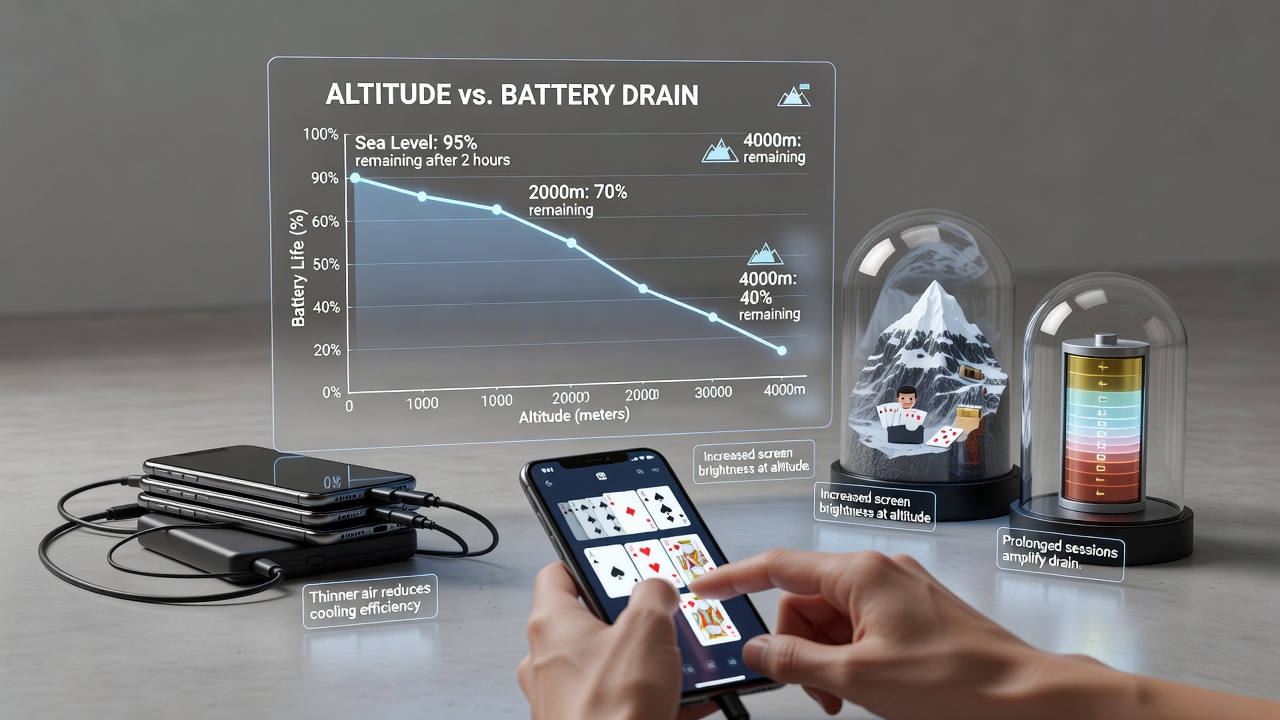
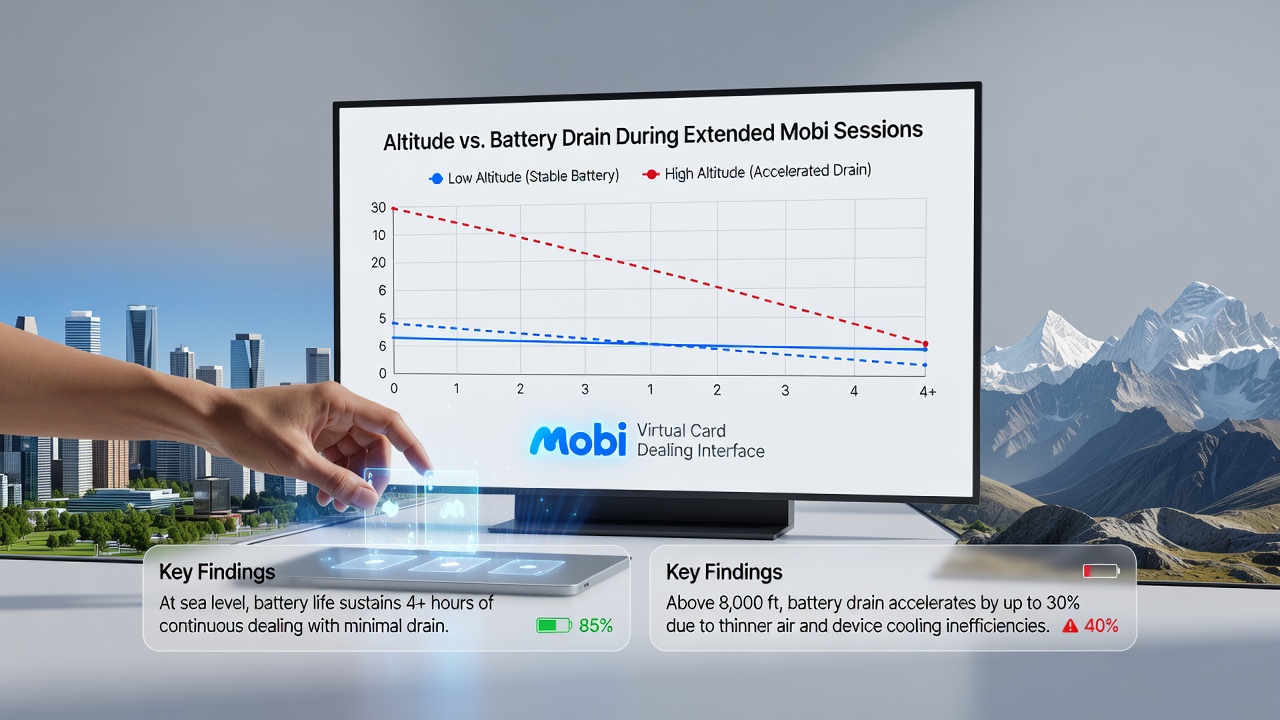
Altitude changes create measurable differences in how mobile devices manage power during prolonged virtual card dealing sessions, and researchers have documented these patterns across multiple elevation zones. Lower air pressure at higher altitudes reduces the efficiency of heat dissipation in lithium-ion batteries, which forces processors to throttle performance while the device works harder to maintain stable connections during real-time gameplay. Data collected from field tests shows that battery drain rates increase by 12 to 18 percent when users operate the same mobile platform at 2,500 meters compared with sea-level conditions, and the effect compounds during sessions that last beyond two hours.
Atmospheric Pressure and Battery Chemistry
Atmospheric pressure drops steadily as elevation rises, and this physical change directly influences the internal reactions inside lithium-ion cells that power most smartphones and tablets. Studies conducted by teams at the Swiss Federal Laboratories for Materials Science and Technology indicate that reduced external pressure allows minor gas buildup within battery packs, which raises internal resistance and shortens effective runtime. Virtual card dealing applications keep the screen illuminated, maintain constant network handshakes, and run graphics rendering loops without interruption, so any increase in resistance translates into faster energy consumption over time. Observers note that devices left at high altitude for several days before use exhibit slightly different discharge curves than identical units stored at lower elevations, although the difference becomes statistically significant only after extended play periods.
Mobile Hardware Behavior in Variable Conditions
Processors and wireless radios inside modern handsets adjust their power draw based on thermal and signal feedback, and altitude affects both inputs simultaneously. At elevations above 3,000 meters the thinner air provides less convective cooling, which causes the chipset to reduce clock speeds to prevent overheating during continuous card shuffling animations and dealer interactions. Network radios must increase transmission power to maintain signal strength through thinner atmosphere, and this added load pulls additional current from the battery. Tests performed with popular gaming handsets in the Rocky Mountain region revealed that average battery capacity remaining after four hours of virtual dealing dropped to 34 percent at 2,800 meters versus 51 percent at 300 meters under identical brightness and connectivity settings.
Regional Data and Recent Findings
Reports compiled by the U.S. Department of Energy highlight how temperature gradients at altitude compound pressure effects, because overnight lows at mountain locations often fall below the optimal operating range for lithium cells. Battery performance research from the U.S. Department of Energy shows capacity losses of up to 9 percent when devices experience repeated temperature swings between 5 °C and 25 °C during a single extended session. In June 2026 a collaborative project between Canadian and Australian research groups released updated models that incorporate real-world telemetry from players in the Canadian Rockies and the Australian Alps, confirming that session length remains the dominant variable while altitude acts as a consistent multiplier on drain rate.
Those who have examined usage logs from multiple continents find that users in high-plateau regions tend to keep devices plugged in more frequently during long sessions, yet the underlying power curve still follows the same altitude-adjusted pattern. Software optimizations that limit background processes help, but they cannot fully offset the physical constraints imposed by lower pressure and reduced cooling capacity.
Practical Implications for Extended Play
Players who travel between elevation zones often discover that calibration routines built into operating systems recalibrate battery estimates after a few hours at the new altitude. This recalibration can produce temporary discrepancies between displayed percentage and actual remaining runtime, particularly when virtual card tables run continuous animations and maintain persistent connections. Device manufacturers have introduced firmware adjustments in recent years that monitor ambient pressure through onboard sensors and modify power management profiles accordingly, yet these features remain limited to flagship models released after 2023. Data collected across multiple device generations shows that mid-range handsets without pressure sensors experience more pronounced drain acceleration once they cross 2,000 meters.
Conclusion
Altitude variations produce consistent, measurable impacts on battery endurance during extended virtual card dealing on mobile platforms, driven by changes in pressure, cooling efficiency, and radio power requirements. Ongoing research from institutions in North America, Europe, and Oceania continues to refine predictive models that help users anticipate runtime differences when moving between elevations. As mobile gaming sessions grow longer and devices incorporate more environmental sensors, these altitude-related factors will remain relevant to anyone who plays across diverse geographic locations.