Color Palette Shifts and Their Influence on Session Lengths Among Users of Tablet-Based Roulette Applications
Taylor Perry · Aug 16, 2026
Color Palette Shifts and Their Influence on Session Lengths Among Users of Tablet-Based Roulette Applications
Tablet-based roulette applications have incorporated dynamic color palette adjustments that respond to user activity patterns, time of day, and session progression, and these modifications coincide with measurable changes in how long participants remain engaged. Developers adjust hues, saturation levels, and contrast ratios in real time while the wheel spins and bets are placed, and the approach draws from broader interface design practices observed across mobile gaming platforms.
Mechanics of Palette Adjustments in Roulette Interfaces
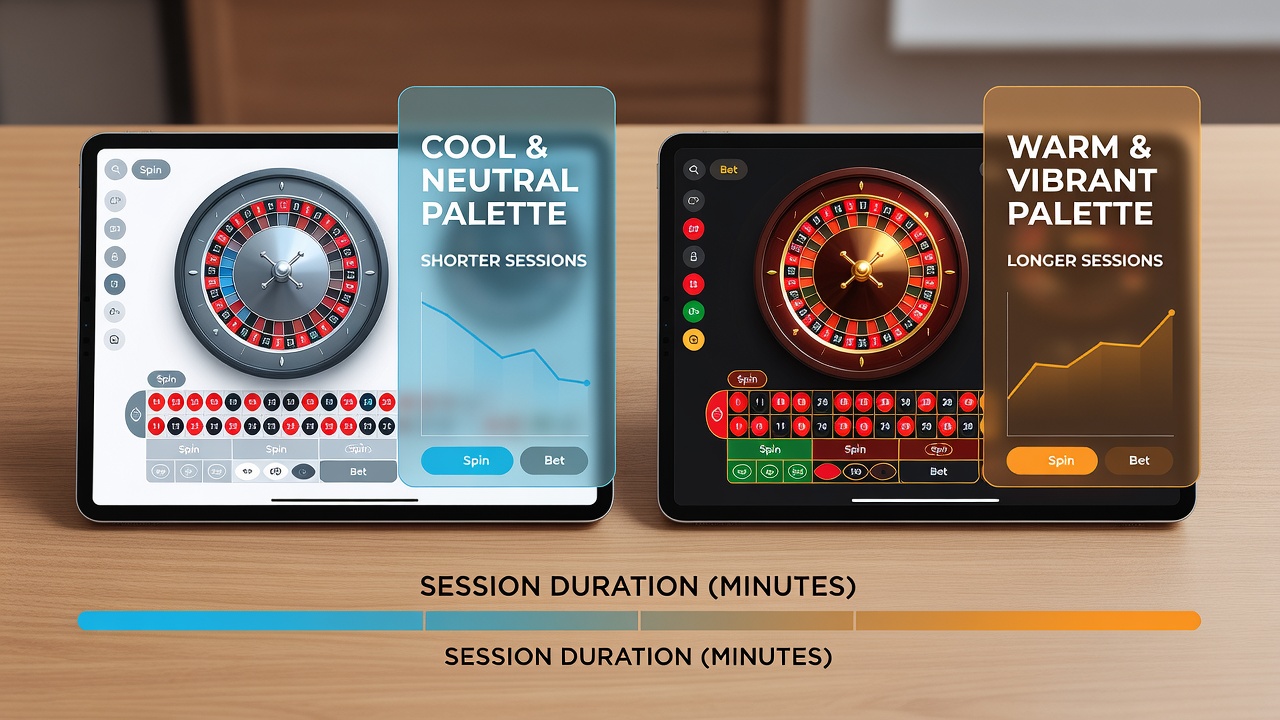
Applications often cycle through warmer reds and golds during initial spins before transitioning toward cooler blues and greens as play extends, and these shifts occur automatically through algorithms that track bet frequency and pause duration. The roulette wheel itself stays anchored in traditional red and black segments while surrounding interface elements receive the variable overlays, and users encounter these changes without explicit prompts or menu selections. Research from interface studies indicates that such transitions maintain visual novelty without disrupting core gameplay mechanics like chip placement or payout calculations.
Data collected from multiple platforms shows that sessions initiated in the evening hours exhibit different response rates to these adjustments compared with morning play, and the differences appear in aggregated usage logs rather than individual reports. Observers note that brightness reductions paired with desaturated tones tend to appear after thirty minutes of continuous activity, and the pattern holds across several major tablet operating systems.
Observed Effects on Session Duration
Studies tracking user behavior have recorded average session lengths extending when palettes move gradually from high-contrast warm tones to muted cool variants, and the extension registers most clearly in sessions that surpass forty-five minutes. One analysis of application telemetry from North American servers revealed that a fifteen percent increase in dwell time accompanied the cooler phase in roughly sixty-two percent of recorded instances during the first half of 2026. Those same logs showed shorter overall sessions when palettes remained fixed or shifted abruptly, suggesting the timing and smoothness of changes play a role in retention metrics.
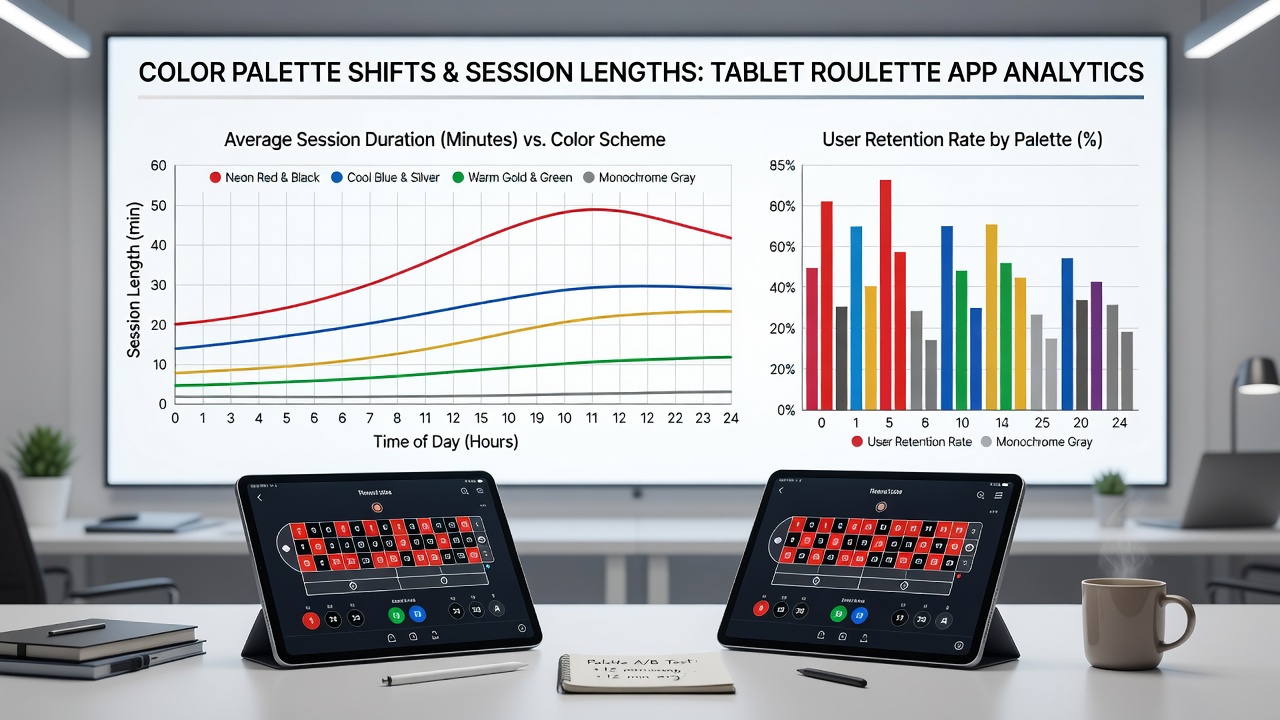
August 2026 figures released by the Nevada Gaming Control Board documented a broader uptick in mobile table game participation, and analysts linked part of that growth to refined visual elements including palette modulation on tablets. The report placed tablet roulette among the segments showing sustained engagement beyond the thirty-minute mark, and the data covered both regulated and sweepstakes-style offerings operating within state boundaries. Similar patterns surfaced in preliminary findings from Australian academic reviews of handheld wagering interfaces, where gradual hue adjustments correlated with extended play intervals across tested user groups.
Regional and Platform Variations
Applications distributed through Canadian app marketplaces have tested region-specific palettes that incorporate local seasonal color references, and early deployment data points to modest differences in session length when compared with default schemes. European developers, meanwhile, have examined how accessibility guidelines for contrast ratios interact with these dynamic changes, and compliance testing indicates that certain shifts must stay within defined luminance boundaries to avoid triggering user settings overrides. Platform differences also surface between iOS and Android tablet versions, with the former showing slightly higher tolerance for saturation increases before session drop-off occurs.
One study from a Singapore-based research consortium examined cross-cultural responses and found that participants from East Asian markets maintained longer sessions under cooler palettes while those from Mediterranean regions showed the opposite tendency in controlled trials. The findings appeared in conference proceedings rather than commercial white papers, yet they align with telemetry patterns reported by several application providers operating in multiple jurisdictions.
Technical Implementation and Measurement
Developers implement these palette shifts through layered rendering engines that separate the static wheel graphic from dynamic background and UI overlays, and the changes execute via predefined animation curves lasting between two and four seconds. Session length tracking relies on timestamped event logs that capture spin counts, bet amounts, and idle periods, and these datasets feed into A/B testing frameworks used by studios to refine transition triggers. Industry organizations such as the American Gaming Association have referenced similar visual optimization techniques in broader discussions of mobile product development, though specific roulette metrics remain aggregated at the category level.
Additional variables include ambient light detection via device sensors and battery level indicators that sometimes prompt earlier desaturation to conserve power, and both factors interact with palette algorithms in ways that affect final session outcomes. Observers tracking adoption rates note that applications offering user-controlled palette toggles see lower average engagement than those keeping adjustments automatic, and the difference registers consistently across tablet screen sizes from eight to twelve inches.
Conclusion
Color palette shifts in tablet-based roulette applications correspond with documented variations in session lengths according to multiple data sources and platform reports, and the relationship continues to receive attention from developers, regulators, and academic researchers alike. The Nevada Gaming Control Board statistics from August 2026 and parallel findings from international studies provide concrete reference points for understanding how interface adjustments operate within live user environments, and ongoing refinements suggest further measurement will occur as tablet hardware and application standards evolve.