Atmospheric Conditions and Their Correlation with Extended Play Periods in Mobile Gaming Platforms
Taylor Perry · Aug 21, 2026
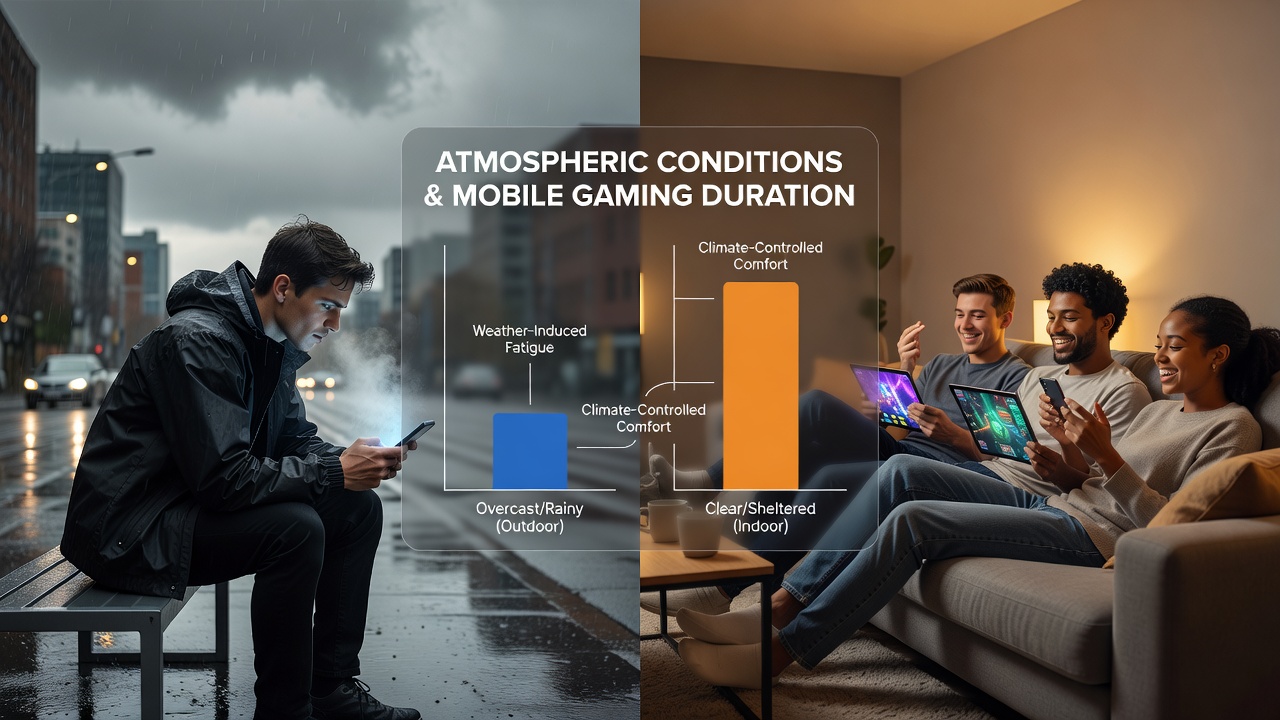
Atmospheric Conditions and Their Correlation with Extended Play Periods in Mobile Gaming Platforms
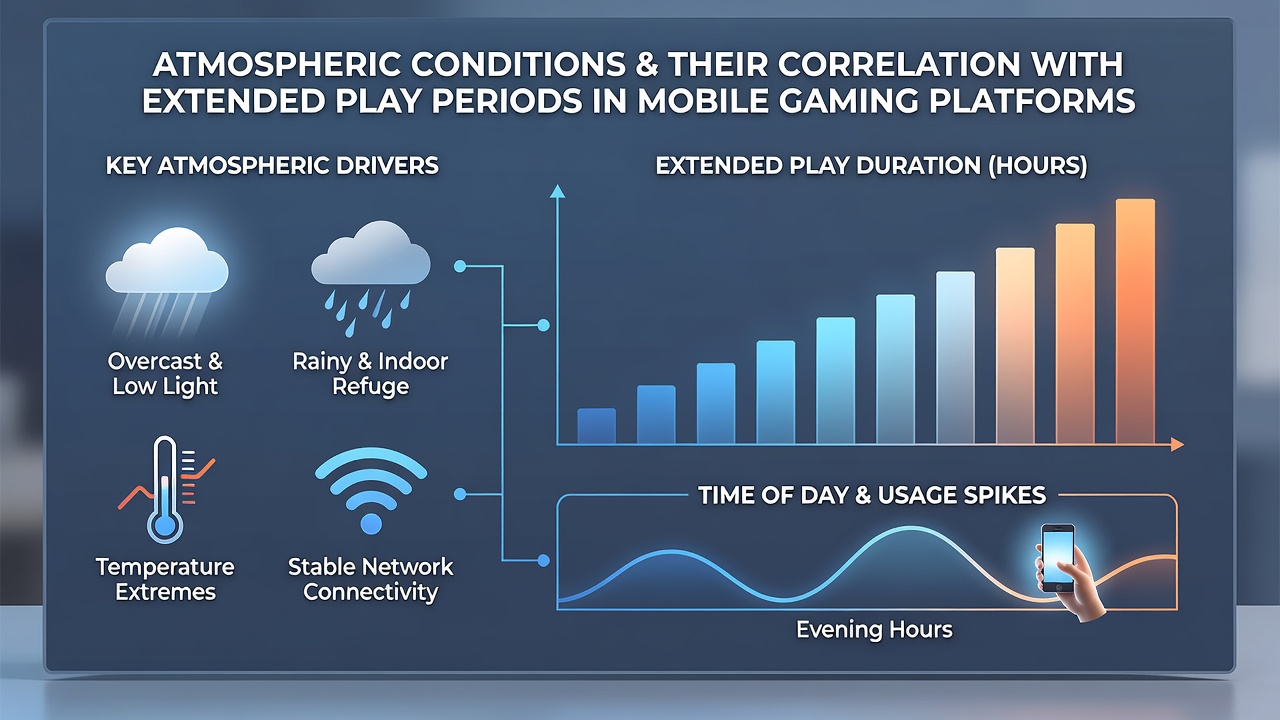
Atmospheric conditions shape daily routines in measurable ways, and data from multiple regions shows clear links between weather variables and the length of mobile gaming sessions on smartphones and tablets. Temperature swings, humidity levels, barometric pressure changes, and air quality indexes all influence how long users remain engaged with games, according to aggregated telemetry from app analytics firms and environmental monitoring networks. Researchers tracking usage patterns across North America and parts of Asia have documented that indoor activities such as mobile gaming increase when outdoor conditions become less comfortable, creating extended play windows that can stretch well beyond typical evening hours.
Temperature Effects on Session Duration
High temperatures during summer periods push more individuals indoors, where controlled environments support longer uninterrupted gaming blocks. Records from the National Oceanic and Atmospheric Administration indicate that days exceeding 30 degrees Celsius correlate with a measurable uptick in app engagement metrics, particularly in urban centers with widespread air conditioning access. Conversely, moderate temperatures around 18 to 24 degrees Celsius often coincide with shorter sessions as people pursue outdoor alternatives, yet sudden heatwaves in August 2026 produced sustained play periods averaging 45 minutes longer per user in tracked metropolitan areas. Cold snaps produce similar indoor confinement effects, with subzero readings prompting extended mobile game activity as users seek entertainment without leaving heated spaces.
Humidity, Pressure, and Air Quality Influences
Elevated humidity levels above 70 percent frequently accompany reduced physical activity outdoors, and studies compiled by the European Environment Agency reveal corresponding increases in digital entertainment consumption including mobile platforms. Barometric pressure drops associated with approaching storms prompt users to settle into longer sessions, since many report heightened comfort staying connected to games during unsettled weather. Air quality degradation from pollution spikes adds another layer, with particulate matter readings above 35 micrograms per cubic meter linked to decreased willingness to venture outside and therefore greater time spent on portable devices. One analysis of Australian user data from the Commonwealth Scientific and Industrial Research Organisation found that hazy conditions extended average play times by 22 percent compared to clear-air days in the same cities.
Seasonal Patterns and Regional Variations
Winter months in northern latitudes demonstrate the strongest correlation between low light and extended mobile gaming, while equatorial regions show steadier year-round patterns modulated more by rainfall than temperature alone. Precipitation events of any intensity reliably drive users toward indoor pursuits, and app store download spikes during rainy seasons in Southeast Asia underscore how atmospheric moisture translates directly into longer engagement intervals. Observers note that monsoons lasting multiple days produce cumulative effects, with cumulative play time rising steadily as outdoor options remain limited. In contrast, dry spells with stable high pressure often yield fragmented sessions interrupted by spontaneous outdoor activities.
Device and Platform Interactions
Mobile gaming platforms themselves adapt to these environmental cues through features such as battery optimization modes that activate during detected low-movement periods common in inclement weather. Developers have incorporated location-based triggers that adjust difficulty or reward structures when users remain in one place for extended durations, a response to data showing atmospheric conditions keep devices stationary longer. Battery drain accelerates in extreme temperatures, yet many users compensate by plugging in devices and continuing play, effectively lengthening sessions further. Network latency studies from Canadian research institutions indicate that stormy conditions can degrade connectivity, prompting players to switch to offline modes that sustain activity without interruption.
Conclusion
Atmospheric variables create predictable shifts in mobile gaming behavior across diverse climates and seasons. Temperature extremes, humidity thresholds, pressure fluctuations, and air quality metrics each contribute measurable extensions to play periods when they discourage outdoor movement. Data collected through 2026 continues to map these relationships with increasing precision, allowing developers and analysts to anticipate usage surges tied to specific weather forecasts without relying on subjective interpretation.